
Last Updated: July 2026
Rats and mice rely almost entirely on scent to navigate. They mark trails with urine, follow the same paths night after night, and avoid anything that smells unfamiliar or threatening. Rat repellents work by exploiting exactly that instinct: instead of killing rodents, they disrupt the scent trails and signals rats depend on, which pushes them to look for a less confusing place to live.
That makes repellents the most humane category of rodent control, and often the safest option in homes with kids, pets, or livestock nearby. They won’t always solve a severe infestation on their own, but combined with traps or sealed entry points, they can make a property far less appealing to rats in the first place.
Repellents generally fall into three categories: scent-based sprays and oils, granules built around a predator’s scent, and electronic devices that rely on ultrasonic sound rather than smell at all. Each works through a different mechanism, which is part of why combining two types often outperforms relying on just one, especially in a property with multiple entry points or a mix of indoor and outdoor rodent activity.
Below, we’ve reviewed the 10 repellents worth considering in 2026, along with what to look for before you buy one, how to combine them with basic exclusion work like sealing gaps and holes, and where each type tends to fall short.
Our Top Picks at a Glance
| Repellent | Type | Best For | Coverage |
|---|---|---|---|
| Triple Action Rodent Repellent (GM-X) | Ultrasonic + electromagnetic | Garages, attics, basements | Up to 6 ft radius per unit |
| Eco Defense Mice Repellent | Organic spray | Kitchens, cabinets | Spot treatment |
| Peppermint Essential Oil (Essentially KateS) | Natural oil | Small enclosed spaces | Spot treatment |
| Ultrasonic Pest Repeller (MaxMoxie) | Ultrasonic | Average-sized rooms | ~1,200 sq ft |
| Vehicle Protection (Exterminators Choice) | Natural spray | Cars, engine bays | Spot treatment |
| T3-R Triple High Impact Repeller | Ultrasonic (3 speakers) | Large indoor/outdoor spaces | Wide, multi-directional |
| Ultrasonic Pest Repeller (2-pack) | Ultrasonic | Homes, offices, shops | ~1,300 sq ft per unit |
| Victor Scent-Away Rodent Repeller Drops | Natural drops | Cabinets, drawers, machinery | Spot treatment |
| Eco Defense Mice Repellent Pellets | Natural granules | Attics, crawl spaces | Broad scatter areas |
| Shake-Away Rodent Repellent Granules | Predator-scent granules | Yards, barns, garden beds | Broad outdoor areas |
Ultrasonic devices and natural sprays work differently, so pairing one of each often covers more ground than relying on a single method.
What Is Rat Repellent?
A rat repellent doesn’t kill rodents. Instead, it interferes with the cues rats and mice use to feel safe in an area, mainly scent. Rats mark their territory, food sources, and travel routes with urine, and most repellent sprays or granules work by masking or overpowering that scent so the area no longer feels familiar to them.
Electronic repellents take a different approach entirely. Rather than targeting scent, they emit ultrasonic frequencies well above the range of human hearing but well within a rodent’s, which is meant to make the area uncomfortable enough that rats avoid it. Some newer models pair that ultrasonic signal with a low-level electromagnetic pulse, on the theory that rats and mice can adapt to a single unchanging frequency over time but struggle to get comfortable when the signal keeps shifting.
It’s worth noting upfront that ultrasonic repellents are the most debated option in this category. Independent testing has produced mixed results over the years, and while many users report success, others see no change in rodent activity at all. Part of the inconsistency comes down to placement and obstacles. Sound waves don’t pass through walls, furniture, or boxes stacked in a garage, so a unit that works well in an open room might do almost nothing in a cluttered basement. If you go the ultrasonic route, treat it as one layer of defense rather than a guaranteed fix, and pair it with sealing up entry points using steel wool, caulk, or hardware cloth wherever rats are getting in.
How to Choose the Right Rat Repellent
Coverage area. Sprays and oils work best in smaller, enclosed spaces like cabinets or attic corners. Ultrasonic units vary widely in range, so check the manufacturer’s square footage rating rather than assuming one size fits every room.
Speed of results. Some repellents start working within seconds of a rat encountering the scent or sound; others take days or weeks of consistent exposure before rodents fully abandon an area. If you’re dealing with an active, visible infestation, pair a fast-acting method with a slower one rather than waiting on a single product.
Room layout. Ultrasonic waves don’t travel through walls, furniture, or doors, so a single unit rarely covers more than one room. Larger or oddly shaped spaces, like a garage with a car parked in the middle, usually need more than one speaker to eliminate blind spots where rodents can still move freely.
Target species. Not every repellent affects every rodent equally. If you’re dealing with roof rats and squirrels together, for instance, look specifically for a product that lists both, since some formulas are far more effective against mice than larger rats.
Weather and season. Granules can wash away or lose potency in rain, while liquid sprays tend to hold up better outdoors in wet conditions. If you’re treating an outdoor area heading into a rainy season, factor that into which format you choose.
The 10 Best Rat Repellents
1. Triple Action Rodent Repellent (GM-X Mouse Rat Repellent Ultrasonic)
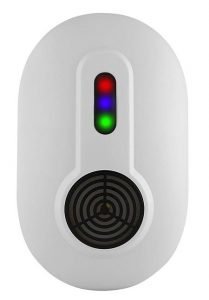
This compact plug-in unit stands out because it combines two ultrasonic frequencies with a low-level electromagnetic wave, rather than relying on ultrasonic sound alone. The idea is that constantly shifting between the three signals keeps rodents from adapting to any single frequency, something that can happen with basic single-tone ultrasonic devices over time.
It draws very little power (around 15 watts) and is rated for use in attics, basements, garages, and patios, as well as indoors. Most users report a noticeable drop in activity within two to three weeks of continuous use, though it works best within about 6 feet of the unit, so larger open spaces may need more than one.
Pros: Combines three signal types in one device; works on a range of pests beyond rodents, including roaches and fleas; low power draw; safe around kids and pets.
Cons: Limited effective range of roughly 6 feet.
2. Eco Defense Mice Repellent, Organic Spray
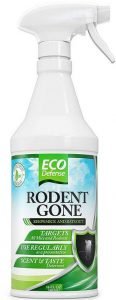
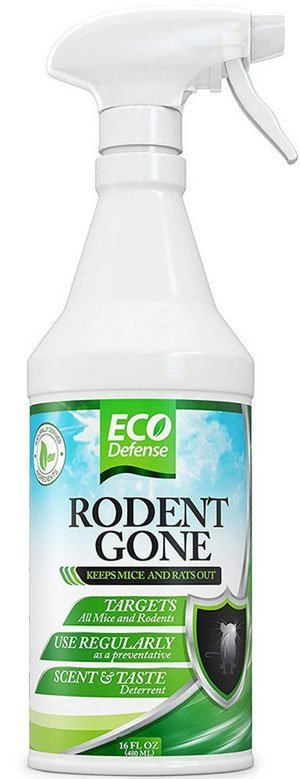
For anyone who wants to avoid electronics or chemical pesticides entirely, Eco Defense’s spray is built around peppermint oil, cinnamon oil, castor oil, and a plant-based surfactant. It’s applied directly to areas where rodents travel or nest, and can also be sprayed straight onto a rat if you catch one in the act.
Unlike chemical repellents that can leave a harsh residue, this one keeps rooms smelling like peppermint rather than pesticide, which is part of why it’s popular for kitchens and pantries specifically.
Pros: Plant-based ingredients; safe for use around food-prep areas; doubles as a car and cabinet treatment.
Cons: Needs to be reapplied fairly often to stay effective.
3. Peppermint Essential Oil, 4 oz. (Essentially KateS)
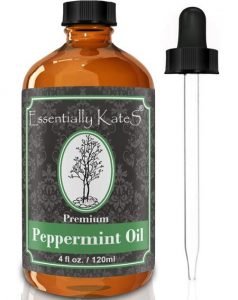
Peppermint oil in its concentrated form is strong enough on its own to be one of the more widely recommended natural repellents, and this 4-ounce bottle comes with a glass dropper for controlled application. A few drops on cotton balls, tucked into cabinets, attic corners, or along baseboards, is usually enough to make rodents steer clear.
The bottle also includes a short guide covering different ways to apply it, which is a nice touch for anyone using essential oils for pest control for the first time. Beyond rodents, the scent also discourages some insects, including ants and spiders.
Pros: Multi-purpose against several pest types; comes with usage instructions; affordable relative to how long a bottle lasts.
Cons: The scent fades within about a week, so cotton balls need periodic refreshing.
4. Ultrasonic Pest Repeller, Humane Mice Control (MaxMoxie)
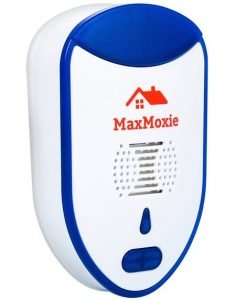
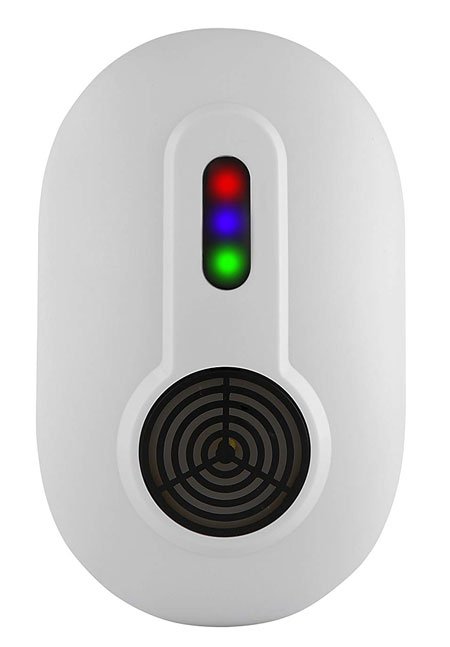
This plug-in unit is built for average-sized rooms and kitchens, covering roughly 1,200 square feet per unit at a frequency range between 20 and 65 kHz. It runs on very little power and includes a small night-light function as a secondary feature, which is a small but genuinely useful addition if you’re placing it somewhere like a hallway or basement stairwell.
Pros: Energy-efficient; safe around children and pets; doubles as a soft night-light.
Cons: Some users report inconsistent results against certain insect pests, even though rodent performance is generally solid.
5. Vehicle Protection, Exterminators Choice Mice & Rodent Repellent
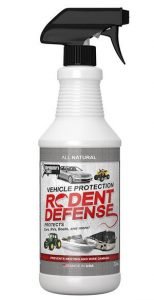
Rodents nesting inside a vehicle’s engine bay or wiring is a genuinely common and expensive problem, since chewed wiring can lead to real mechanical damage. This spray is formulated specifically for that scenario, using peppermint oil, rosemary oil, vinegar, and white pepper extract to create a scent that’s strong enough to deter rodents from nesting near a warm engine.
It’s also labeled for use against rabbits, gophers, squirrels, and raccoons, which makes it a reasonable option for garages and sheds beyond just car engines.
Pros: Purpose-built for vehicles and engine bays; effective against a wider range of animals than just rodents; long-lasting scent.
Cons: Pricier than general-purpose sprays.
6. T3-R Triple High Impact Mice, Rat, Rodent Repeller
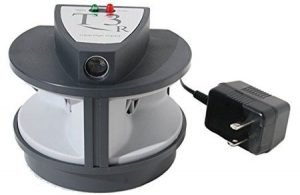
With three separate speakers built into one unit, the T3-R is designed to cover more ground and more angles than a standard single-speaker ultrasonic repeller, which makes it a reasonable fit for larger rooms or spaces with a lot of furniture creating sound-blocking obstacles.
It’s rated safe around cats, dogs, and kids, since the frequencies it emits fall outside the range of human and common pet hearing. Performance against rats and house mice is generally strong, though the manufacturer’s own data puts squirrel deterrence around 75%, noticeably lower than its rodent-specific results.
Pros: Multi-directional coverage; safe around common household pets; comes with a long cord for flexible placement.
Cons: Higher price point than single-speaker units; less reliable against squirrels specifically.
7. Ultrasonic Pest Repeller, 2-Pack
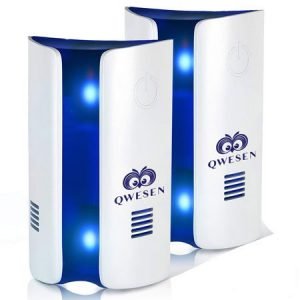
Sold as a pair, this option is meant for apartments, small offices, or shops where more than one room needs coverage. Each unit handles up to about 1,300 square feet and produces a shifting range of ultrasonic frequencies aimed at rodents’ auditory and nervous systems, which tends to make an area uncomfortable enough that they relocate.
Beyond rats and mice, it’s also marketed against roaches, fleas, and crickets, though results against flying insects like mosquitoes tend to be weaker than its rodent performance.
Pros: Two units cover more square footage for the price; simple, tool-free setup; quiet operation.
Cons: Weaker performance against mosquitoes specifically, despite being marketed for them.
8. Victor Scent-Away Rodent Repeller Drops, M803
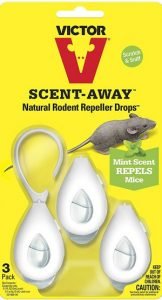
This is one of the simplest products on this list: a small pot of concentrated peppermint oil with a membrane-sealed opening that releases a steady scent once opened, rated to last around 60 days per unit. A built-in indicator window shows how much repellent is left, so you know when it’s time to replace it.
Its compact, low-profile design makes it easy to tuck into drawers, cabinets, or engine compartments without taking up much space, though like most scent-based repellents, it only works well if placed directly along a route rodents are actually using.
Pros: Long-lasting single application (about 60 days); easy to place discreetly; 100% natural ingredients.
Cons: The seal can be stiff to open; placement location matters more than with sprays.
9. Eco Defense Mice Repellent Pellets
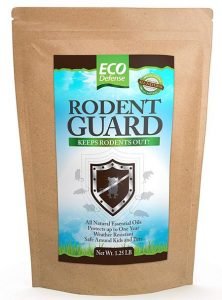
These granules are a natural, non-lethal alternative to poison pellets, built from a blend of essential oils rather than any toxic active ingredient. The scent is designed to be unpleasant enough that rodents avoid the treated area entirely rather than simply tolerating it.
It’s rated for house mice, deer mice, and field mice, and works both indoors and outdoors, which makes it a flexible option for anyone treating an attic, crawl space, or garden bed at the same time.
Pros: Long-lasting granules (over a year per application in many cases); safe around pets, kids, and gardens; no toxic runoff risk.
Cons: Costs more upfront than basic poison pellets, though there’s no disposal or secondary-poisoning concern to manage.
10. Shake-Away Rodent Repellent Granules
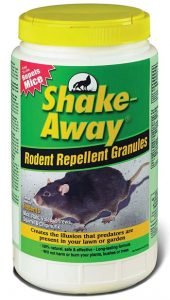
Shake-Away takes a completely different approach from the rest of this list: instead of masking scent or emitting sound, it uses the scent of a natural predator, coyote urine, to trigger a rodent’s instinct to avoid the area entirely. It’s a straightforward predator-prey response rather than a chemical deterrent.
The 5-pound bag is suited for larger outdoor areas like yards, garden beds, or the perimeter of a barn, and it’s also effective against chipmunks, voles, and shrews in addition to rats and mice.
Pros: Works through natural instinct rather than chemicals; effective against a wider range of small mammals; safe for garden use.
Cons: Less consistent against squirrels specifically; the coyote-urine scent itself isn’t pleasant to most people either.
How to Use Rat Repellent Effectively
Follow the application instructions on the product label closely. Most repellents don’t require anywhere near the volume that, say, a flea treatment would.
Weather matters more than most people expect. Rain and high humidity can wash away granules or dilute sprays, so if you’re starting a new repellent for the first time, pick a dry stretch of days to establish the scent before weather interferes with it.
Rotate ingredients occasionally. If rats in your area have already been exposed to a particular scent, like standard peppermint spray from a neighboring property, they may already be somewhat used to it. Switching to a different active ingredient, such as a predator-scent granule instead of an essential oil spray, can restore effectiveness.
If sprays alone aren’t cutting it, layer in an ultrasonic device or a predator-scent product rather than simply reapplying more of the same spray.
Ceiling and wall-void spaces are hard to treat with sprays or oils, since you can’t physically reach every gap. Granules or ultrasonic devices tend to work better in these harder-to-access areas.
Pair repellents with basic exclusion work whenever possible. A rat can squeeze through a gap about the size of a quarter, and a mouse needs even less room, so stuffing steel wool into visible gaps around pipes, vents, and foundation cracks, then sealing over it with caulk, closes off the entry points that no amount of scent or sound will fix on its own. Repellents work best at discouraging rats from an area they can still technically get into. They’re far less effective as the only line of defense against an open entry point.
Benefits of Rat Repellents
Repellents are the most humane way to manage a rodent problem, since the goal is relocation rather than killing. That also makes them a reasonable first line of defense in homes with pets, small children, or anyone uncomfortable with poison or traps.
Most repellents, natural sprays especially, are non-toxic, so there’s no risk of secondary poisoning if a pet happens to get into one. They also tend to be reusable or long-lasting, which keeps the ongoing cost fairly low compared to constantly replacing poison bait.
Limitations Worth Knowing About
Ultrasonic devices are the most contested product type in this category. Some households see a real drop in rodent activity, while others notice no change at all, and independent test results over the years have been inconsistent enough that regulators have pushed back on some manufacturers’ more aggressive efficacy claims. Treat ultrasonic repellers as a supplement to other methods, not a standalone solution for an active infestation.
Scent-based repellents also require consistency. Rodents can become desensitized to a smell they encounter repeatedly, especially if it isn’t reapplied often enough, and sprays or oils can only cover the areas you physically reach, unlike a trap or bait station that works passively in that one spot around the clock.
Frequently Asked Questions
Where does rat repellent spray work best?
Indoors, spray repellents perform best in kitchens, cabinets, and along baseboards where rats travel. In vehicles, focus on the engine bay and any exposed wiring, since that’s typically where rodents nest.
Where should I place an ultrasonic repellent device?
Bedrooms, kitchens, garages, and basements all work, but check the manufacturer’s square footage rating first so you’re not relying on one unit to cover a space it wasn’t built for.
How does an ultrasonic device actually repel rodents?
It emits high-frequency sound waves outside the range of human hearing that rodents find disorienting or uncomfortable, which is meant to push them toward quieter areas instead.
Is rat repellent still effective today?
Yes, natural sprays, oils, and predator-scent granules remain a reliable layer of rodent control, and ultrasonic devices can help as a supplement, though their standalone effectiveness varies more than scent-based options.
Which repellent works best in a kitchen?
Natural sprays and oils are usually the better fit for kitchens, since they’re non-toxic around food-prep surfaces. An ultrasonic device can also work well there if it’s rated for the room’s square footage.
Is catnip an effective mouse repellent?
Yes, catnip’s strong scent is genuinely unpleasant to rodents and works as a natural deterrent, similar in principle to peppermint oil.
Which repellent works best for a car?
A spray formulated for vehicles, applied around the engine bay and wiring, tends to outperform ultrasonic devices in that specific setting, since sound waves don’t travel as predictably through an engine compartment.
Is rat repellent spray safe around pets?
Non-toxic, plant-based sprays are generally safe around pets, but it’s still worth checking the specific product label, since formulations do vary.
How long does it take for a repellent to start working?
Fast-acting sprays and oils can change behavior within seconds of a rat encountering the scent, while granules and ultrasonic devices sometimes take one to three weeks of continuous exposure before you notice a clear drop in activity.
Can I use more than one type of repellent at once?
Yes, and in most cases you should. Pairing a scent-based spray or granule with an ultrasonic device covers both the smell-driven and sound-sensitive instincts rats rely on, which tends to produce better results than either method alone.
Final Thoughts
Peppermint Essential Oil remains one of the most versatile picks on this list, effective, affordable, and simple enough for almost any household to use without much setup. That said, the right choice really depends on where you’re applying it: a spray for the kitchen, a predator-scent granule for the yard, and an ultrasonic unit for a garage all solve slightly different problems.
None of these repellents are likely to harm people, pets, or the surrounding environment, which is a big part of their appeal over poison or heavy chemical treatments. Combine one or two methods based on where your rodent activity actually is, and you’ll get considerably further than relying on a single product alone.


Good article Cheri. I have had mice in my kitchen and peppermint oil helped me to repel them.
Hello Catherine,
Glad to know that peppermint works to repel mice from your area. And thanks for sharing your feedback.
Hi Cheri,
I have tried several natural methods to keep mice away from my house. I have also tried snap trap. Now I want to try an ultrasonic device. Will they really works?
Hi Grace,
I don’t know why snap trap didn’t work for you. I think you may tried wrong bait, trap or place. However, you can try the T3-R Triple High Impact Mice, Rat, Rodent Repeller if you want an effective ultrasonic device. Hope it will keep mice away from your area.
Thanks
Cheri
Hi Cheri,
What do you think about poison? I have rat problem in my apartment and want to try poison. Will it works to remove rats problem?
Hey Ivan,
Rat poison works well to kill rats and mice. But you should aware while using poison in the kitchen or garden. You should use pet/kids safe poison bait.