
Last Updated: January 2026
Rats and mice are one of the most common — and most destructive — pest problems homeowners deal with, whether they’re showing up in the kitchen, the garage, or the garden shed. The right rat poison (technically called a rodenticide) can clear an infestation faster and more thoroughly than traps alone, especially when you’re dealing with more than one or two rats.
Rodenticides aren’t one-size-fits-all, though. Some are fast-acting neurotoxins, others are slow-acting anticoagulants, and a few are marketed as “natural” alternatives. The right choice depends on how bad your infestation is, whether you have pets or kids in the house, and whether local regulations restrict certain products — some second-generation anticoagulant rodenticides (SGARs) are restricted-use or banned for consumer purchase in states like California, so it’s worth checking your state’s rules before buying.
Below, we’ve compared 10 rat poison options across effectiveness, safety, and price, based on hands-on experience dealing with rats in and around the home, garden, and garage for over a decade.
Quick Comparison Table
| Product | Type | Active Ingredient | Best For | Kill Speed |
|---|---|---|---|---|
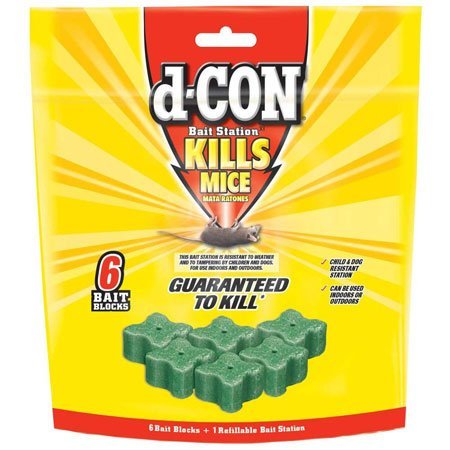
| D-Con Refillable Corner Fit Bait Station | Bait station + block | Varies by refill | Corners, tight spaces | Moderate |
| Neogen Ramik Green Nuggets | Pellet | Diphacinone (1st-gen anticoagulant) | Bait-shy rodents (fish scent) | 4–5 days |
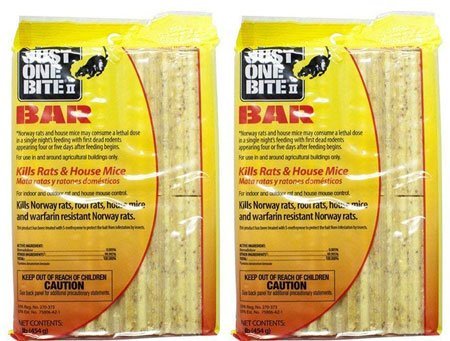
| Farnam Just One Bite II Bar | Bar bait | Bromadiolone (2nd-gen anticoagulant) | Barns, garages, mounting on walls | Single feeding |
| Tomcat All-Weather Bait Chunx | Block bait | 1st-gen anticoagulant | Outdoor, all-weather areas | Moderate |
| RatX (EcoClear) | Pellet | Non-toxic, plant-based | Homes with pets or kids nearby | Slower, humane |
| Victor Fast-Kill Concentrate | Pellet | Bromethalin (neurotoxin) | Fast knockdown of large infestations | 1–2 days |
| Farnam Just One Bite II (Pellets) | Pellet | Bromadiolone (2nd-gen anticoagulant) | Long-term freshness, low food waste | 2–3 days |
| Contrac Blox (18 lb) | Block bait | Bromadiolone | Large-scale, multi-year supply | Single feeding |
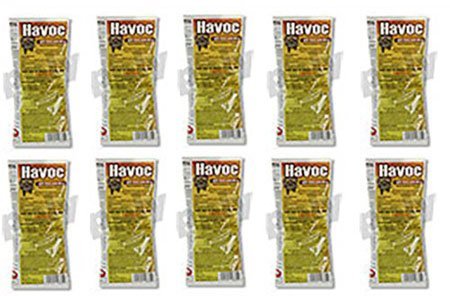
| Havoc Rat & Mouse Bait | Pellet | Brodifacoum (2nd-gen anticoagulant) | Severe infestations | Single feeding |
| JT Eaton 704-PN Bait Block | Block bait | Diphacinone | Pet-conscious households, industrial use | Up to 7 days |
Always confirm current packaging, EPA registration, and local legal restrictions before purchasing — rodenticide formulations and availability can change by state.
Top 10 Rat Poison Reviews
1. D-Con Refillable Corner Fit Mouse Poison Bait Station

The D-Con Refillable Corner Fit Bait Station is a bait-and-trap combo designed to lure rats in, let them feed, and let them leave before dying elsewhere — which means less cleanup for you. It comes in two refill sizes (6 and 20 bait refills) and has a low-profile design measuring about 7 by 3 inches.
The station has a single entry/exit point with the bait sitting in the center, and it’s built to hold up in extreme outdoor temperatures. It’s also designed to resist tampering from curious kids or pets, so it works well tucked into corners, attics, behind appliances, basements, sheds, or garages.
Pros
- Low-profile design that takes up little space
- Child- and pet-resistant housing
- Weather-resistant for both indoor and outdoor use
- Fits tight spaces like corners and behind appliances
- Affordable
Cons
- Block size may not suit every rat as well as loose pellet bait
2. Neogen Ramik Green Fish-Flavored Weather-Resistant Rodenticide Nuggets
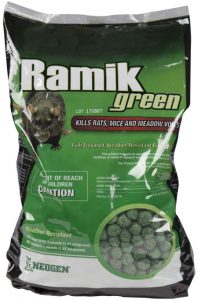
Neogen Ramik Green — often just called “Ramik” — uses Diphacinone (0.005%), a first-generation anticoagulant, to target rats, mice, and meadow voles.
If rats in your area seem to be avoiding standard bait, this is worth trying — the nuggets come with a distinct fish flavor designed to grab their attention. It typically takes 4–5 days after feeding for the poison to take effect, and it’s rated for both indoor and outdoor use in all weather.
One thing to watch for: because of the fish scent, this bait can also attract cats and dogs, so placement matters if pets are nearby.
Pros
- Wax-free formula
- No separate bait required
- Works well in dump/storage areas
- Available in bulk sizes for lower per-unit cost
- Effective on house mice, Norway rats, cotton rats, and more
Cons
- Not pet-friendly
- Not a fast-acting option
3. Farnam Just One Bite II Bar
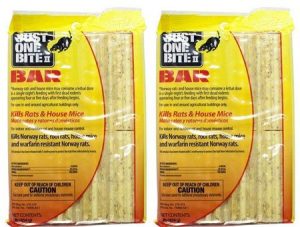
This 16 oz. bar uses Bromadiolone, a second-generation anticoagulant, and is built to handle house rats, Norway rats, and roof rats. A single feeding is typically enough to be lethal.
The bar breaks into 2 oz. sections, which makes it easy to use in bait stations or mount directly on walls, beams, or trees — useful for roof rat activity. Like most anticoagulants, rats often die away from the feeding site, which limits odor and cleanup.
Pros
- Effective across rat, mouse, and rodent sizes
- Works well in barns, garages, and fields, as well as indoors
- Mountable chunks for wall placement
- Handles roof, Norway, and house rats
Cons
- Requires a bait station for best results
- Hazardous to pets and wildlife if accessed directly
4. Tomcat All-Weather Bait Chunx
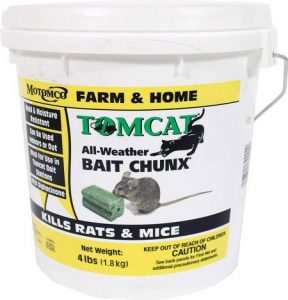
Tomcat’s block bait is built for rats, mice, and other rodents, including squirrels and chipmunks, and it holds up outdoors in all weather. It comes in a 4 lb. bucket that doubles as a feeding container, and the chunks can be mounted on walls or placed in bait stations.
Worth noting: this product has generated some confusion in past reviews over labeling — while some packaging references Bromadiolone, the core active ingredient in many Tomcat All-Weather formulations is a first-generation rodenticide. First-generation anticoagulants can be less effective in areas where rodent populations have built up resistance over time, so if you’re not seeing results, switching to a product built around Bromadiolone or Brodifacoum may work better.
Pros
- Weatherproof for indoor and outdoor use
- Works in bait stations or mounted directly
- Effective on squirrels and chipmunks as well as rats
Cons
- Higher price point
- First-generation formula may be less effective where local rodents have resistance
5. RatX (EcoClear Products), All-Natural Non-Toxic Rat and Mouse Killer
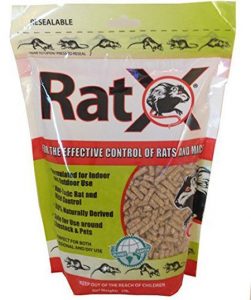
If you want to avoid traditional chemical rodenticides — especially with pets, kids, or livestock nearby — RatX is a plant-based option made from ingredients like sodium, potassium, and cornmeal. It’s designed to work in a single feeding without contaminating nearby crops or food sources.
RatX only targets rats and mice (it won’t help with moles, voles, or gophers), and it’s considered safe enough to store and use in most home settings.
Pros
- Kills within a relatively short window for a non-toxic product
- Doesn’t pollute soil or nearby plants
- Safe for use around farm animals and pets
- Available in multiple pack sizes
Cons
- Pricier than conventional poisons
- Some rats take longer to consume a full lethal dose
6. Just One Bite II Bars, Mice and Rat Killer (Chunk Form)
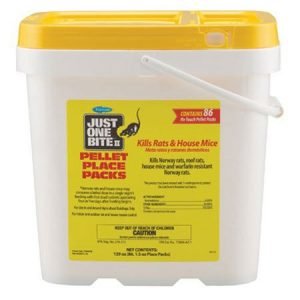
This chunk-style version of Just One Bite works on rats, mice, and other small rodents, including squirrels. It’s straightforward to use — break it into pieces and place it along rodent pathways, in a bait station, or mounted for roof rat activity.
Pros
- Effective on squirrels and chipmunks as well as rats and mice
- Mountable on bait stations, roof nails, or wires
- Works even when chunks are scattered loosely
- Reliable against small-to-medium rodents
Cons
- More expensive than pellet alternatives
- Not ideal for prolonged outdoor exposure
- Larger rats may become lethargic without dying in some cases
7. Victor Fast-Kill Concentrate Rat & Mouse Killer
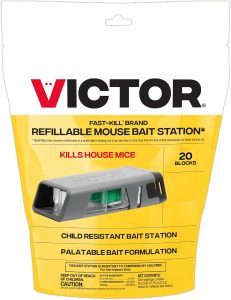
For infestations where you need faster knockdown, Victor’s Fast-Kill Concentrate uses Bromethalin, a neurotoxin rather than an anticoagulant, which means it works through a different mechanism — causing rapid fluid buildup in the nervous system rather than blocking blood clotting.
Because Bromethalin acts faster (often within 1–2 days) and doesn’t rely on cumulative dosing the way anticoagulants do, it can be a good option for larger or more established infestations. As with any neurotoxin-based rodenticide, it should be placed in tamper-resistant bait stations, especially where pets or children are present.
Pros
- Faster-acting than most anticoagulant options
- Effective on rodents that may resist anticoagulant baits
- Works well for heavier infestations
Cons
- Neurotoxins carry different secondary-poisoning risks than anticoagulants — always follow label instructions
- Not the first choice for light, early-stage infestations
8. Contrac Blox Rodenticide (18 lb.)
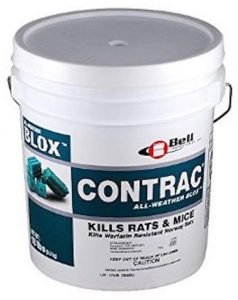
For a whole-property or multi-year supply, Contrac Blox is a large-format option built to handle bigger rat and mouse populations. Unopened, the 18 lb. package can last 2–3 years, though opened blocks are more prone to mold in humid conditions.
The multi-edge blocks are formulated with food-grade attractants and a low-wax base, which makes them appealing to rodents and easy to mount in bait stations.
Pros
- Effective against roof rats, house mice, and other rodents in a single feeding
- Lower secondary-poisoning risk than some Brodifacoum-based products
- Long shelf life if kept sealed
Cons
- Opened blocks can mold in moist environments
9. Havoc Rat & Mouse Bait
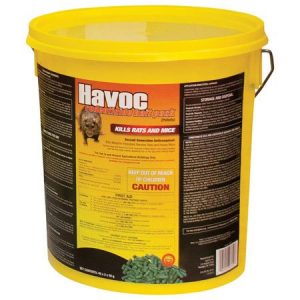
Havoc is built around Brodifacoum, one of the more potent second-generation anticoagulants, packaged in a 10.6 lb. bucket meant for larger or ongoing infestations. A single feeding is typically enough to be lethal across rat, mouse, and roof rat populations.
Because Brodifacoum is highly potent, it also carries more risk if mishandled — it should always be used in a secured bait station, away from pets and children.
Pros
- Strong single-feeding effectiveness
- Pellets resist drying out once opened
- Effective across multiple rodent types
- Long usable shelf life
Cons
- Slower consumption rate for some rodents
- Premium price point
- Higher secondary-poisoning risk if pets access dead rodents
10. JT Eaton 704-PN Bait Block
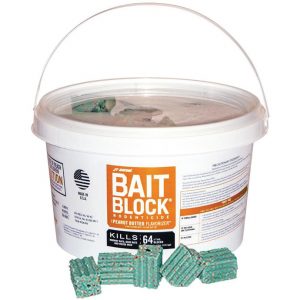
JT Eaton’s peanut-butter-flavored bait block uses Diphacinone and is designed to appeal strongly to rodents’ sense of smell. It’s slower-acting — often taking up to 7 days — but that gradual action tends to keep rodents feeding normally instead of avoiding the bait after seeing others die.
It’s rated for both indoor and outdoor placement, though as always, caution around pets and kids is essential in open areas.
Pros
- Ideal for industrial and commercial use
- Effective against car, ship, and warehouse rodent activity
- Considered comparatively pet-friendly among bait blocks
Cons
- Slow-acting
- Still requires careful placement around pets
What Is Rat Poison?
Rat poison is the common name for rodenticides — pest control chemicals formulated and sold to kill rats, mice, and other rodents. They’re available in solid (block, pellet) and liquid forms, and depending on the active ingredient, can take anywhere from 12 hours to several days to work.
In the U.S., rodenticides are regulated by the EPA (Environmental Protection Agency), and some second-generation anticoagulants are classified as restricted-use pesticides in certain states — meaning they may only be available to licensed pest control professionals rather than for direct consumer purchase. It’s worth checking your state’s specific rules, especially in places like California, before buying.
Types of Rat Poison
There are three broad categories of rodenticide:
Bromethalin (Neurotoxin) Targets the mammal’s brain and liver, causing sodium buildup in liver cells and fluid accumulation in the brain. A single dose can be lethal to multiple rodents, including moles, which is why it’s sometimes called a “single-feed” or “fast” rat poison. It’s also dangerous to pets, so placement matters.
Vitamin D–Based (Cholecalciferol) Slower-acting than Bromethalin, this type floods the rodent’s system with excess vitamin D, causing calcification over roughly 24 hours or more. Sometimes referred to as a “multi-feeding” poison.
Anticoagulants (First- and Second-Generation) The most common category. These prevent blood clotting, leading to fatal internal bleeding over several days. First-generation anticoagulants (like Diphacinone and Warfarin) usually require multiple feedings; second-generation anticoagulants — or SGARs (like Bromadiolone and Brodifacoum) — are potent enough to work in a single feeding, but they also carry higher secondary-poisoning risk to pets and wildlife that might eat a poisoned rodent.
How Does Rat Poison Work?
Rodenticides work through a combination of anticoagulant action, vitamin D toxicity, or metal phosphide compounds, depending on the formulation.
- Metal phosphides react with stomach acid to release toxic phosphine gas, which blocks cells from producing energy and can rapidly damage the heart, liver, kidneys, and brain.
- Vitamin D–based toxins cause calcium buildup that leads to organ failure over time, with symptoms like vomiting, dehydration, and irritability along the way.
- Anticoagulants interfere with blood clotting, causing fatal internal bleeding after repeated (or, for SGARs, single) exposure.
How to Choose the Best Rat Poison
Check the Active Ingredient Common active ingredients include anticoagulants (Diphacinone, Bromadiolone, Brodifacoum), Bromethalin, and Cholecalciferol (Vitamin D3). Ingredients like arsenic or thallium are far more hazardous to all living things and are largely phased out of consumer products — stick to EPA-registered rodenticides with clearly listed active ingredients.
Consider the Format
- Blocks work well on walls, in bait stations, and near snap traps — the waxed body holds up in most weather.
- Pellets suit barns, rice fields, basements, and garages, especially in a bait station.
- Liquid baits can help where water sources are scarce for rodents.
Prioritize Safety If you have pets or young kids, anticoagulants tend to be the safer general category since their slower action reduces (though doesn’t eliminate) risk to larger animals that might be exposed. Tamper-resistant bait stations are non-negotiable in homes with pets or children.
Match Quantity to Infestation Size Don’t buy a large bulk package for what might be one or two rats. For light infestations, a smaller pack lasting 2–4 weeks is usually enough; for larger properties or farms, a 10–15 oz. (or larger) package makes more sense.
Safety Guidelines for Using Rat Poison
Survey the Area First Identify where rats are entering, feeding, and nesting before placing bait — look for food and water sources, and consider nearby risks like gardens, livestock areas, or storage rooms.
Time It Right Most rodenticides shouldn’t be used longer than about a month at a stretch. Rats are most active after dark, so placing bait in the evening — after households wind down for the night — tends to work best.
Check Regularly After placing bait, check periodically for signs of consumption or dead rodents. If you find a poisoned rat, bury it rather than placing it in household trash, and always use gloves when handling both bait and carcasses.
Pest Control Safety Disclaimer: Rodenticides are toxic by design and can pose serious risks to children, pets, and non-target wildlife if used incorrectly. Always follow label instructions exactly, use tamper-resistant bait stations where pets or kids are present, and consider hiring a licensed pest control professional for severe infestations or if you’re unsure about safe placement in your specific situation.
Frequently Asked Questions
What is the best rat poison on the market?
No single product works best everywhere — effectiveness depends on the rodent species and local resistance patterns. That said, options built around Bromadiolone or Brodifacoum (like Farnam Just One Bite II or Havoc) tend to perform well for most household infestations.
What should I do if my dog eats rat poison?
Contact your vet or an animal poison control hotline immediately — don’t wait for symptoms to appear.
What does rat poison look like?
It varies by product — pellets, blocks, and nuggets are common, and some are designed to resemble grain or small chunks of food to appeal to rodents.
How can I keep pets and kids safe around rat poison?
Always use a tamper-resistant bait station, and place it somewhere pets and children can’t access — inside walls, behind appliances, or in secured attic/crawl space areas.
What if my pet eats a rodent that’s been poisoned?
Secondary poisoning is a real risk, especially with second-generation anticoagulants like Brodifacoum. Take your pet to the vet immediately, and if possible, tell them exactly which rodenticide was used — this helps them treat your pet faster.
Is it legal to use rat poison?
In most U.S. states, yes — but some states, including California, restrict or ban certain second-generation anticoagulants for general consumer use. Check your state’s Department of Pesticide Regulation (or equivalent) before buying.
Can rat poison be used on other pests?
Yes — many rodenticides are also effective against mice, moles, voles, and gophers, though not all products target every species (RatX, for example, is rat- and mouse-specific).
Final Thoughts
Choosing the right rat poison comes down to matching the product to your situation: how severe the infestation is, whether pets or kids are around, and what your state allows. For most moderate household infestations, a second-generation anticoagulant like Farnam Just One Bite II offers a strong balance of effectiveness and single-feeding convenience. For homes prioritizing pet safety above all else, RatX or a well-secured first-generation anticoagulant bait station is the safer starting point.
Whatever you choose, pair it with proper placement, tamper-resistant bait stations, and regular monitoring — and don’t hesitate to bring in a licensed pest control professional if the infestation doesn’t clear up on its own.

Hello Cheri,
How dangerous is rat poison for an adult human? And how can I keep my child safe from rat poison while using it in our garden?
Hi Nina,
Rat poison can be dangerous for an adult human if he/she take a large amount of poison. Also, rat poison can cause death.
However, if you want to use poison in your garden, then you should keep your child away from the garden while applying the poison. And try to use kid safe rat poison pellets or bait station.
Hi Cheri,
Thanks for the cool guide and recommendation for rat poison. I want to use the Tomcat All-weather bait Chunx in my small factory, so do you think it will be effective?
Hello Terry,
The effectiveness of rat poison depends on several facts. Make sure you choose the right poison for the right species of mice and check other facts as I described on the How to Choose the Rat Poison Section. Anyway, the Tomcat All-weather bait Chunx is one of the effective rat poison of our list. You can also consider D-Con Refillable Corner Fit Mouse Poison Bait or Havoc Rat & Mouse Bait.
Hi Cheri,
This is really nice stuff about rat poison. I’m very much irritated with the mice problem in the kitchen. I have tried different type mouse traps like the live trap, glue trap and snap trap. Noting works for me. So I decide to use poison in my kitchen.
Do you think it will be a good idea? And if so, which rat poison you will suggest for my kitchen?
Thanks
Lisa
Hello Lisa,
Have you tried the right bait for the trap? You can check the list of best bait for rat trap here https://pestbreaker.com/what-is-the-best-bait-for-rat-trap/157/
However, if you want to try poison, then you can try the poison bait station. It will be safe for kitchen uses.
What do you think about D-Con rat poison? Is it really effective to kill pesky mice?
Hi,
D-Con is a well-known brand for Rat Poison. Their poison is effective to kill rats and mice. But you should ensure that you applied the poison in the right way. And for the right rat or mice.
What is the active ingredient of D-con rat poison/bait?
It’s Cholecalciferol.
I have had rats for the last several months. I used Tom Cat Rat bait. The green cubes.in bait station, But I still see them on the patio and also have fear they may be coming in at night. It has been a nightmare for me. I put the Tom Cat bait outside where they are coming in and they do eat it. But I still do not see a marked lessening of them. I am on edge constantly at night when I hear any noise that conveys rat noise to me. How long does it take to eradicate them with rat poison. also my son in law called in an exterminator but I do not know if it did any good. I am still putting out the bait and I wonder if this will go on indefinitely with them never stopping coming in. I have had them show up at the oddest times. they seem to be coming in for water not food. I keep a spic and span kitchen. I also had them chew through my electrical and destroy my dishwasher. I just don’t think you can ever be safe from them and keep hoping they will go somewhere else. I live in a condo and the management takes no responsibility for getting rid of them. Thanks for your blog though. It helps to know I am not alone with this problem. Bea
Hi Bea,
If you think bait station not working well, then you can try Snap Trap, Glue Trap or Electric Rat Trap. I would personally like to suggest snap trap and here are our recommendations for snap traps.
You can also try natural or ultrasonic rat repellent that will help to keep rats away from your area. And here is our recommended rat repellents.
Hi Cheri,
How long does mouse poison last? I want to use it in my garden area.
Hi Kristen,
It depends on poison to poison and also some other facts like the type of poison and where you will place it. Generally, mice poison last in the garden area for 3 to 7 days.
Hello Cheri,
What is the active ingredient in rat poison?
Hi Joseph,
Different rat poison comes with different active ingredients. You can check our comparison table to find the active ingredients.
Hi Cheri, I live in FL where we have fruit rats and they have taken up residents in my attic since the end of May. I have had a wildlife co. which was worthless and another pest control company that found and closed openings on the roof, and has done just about everything that they could think of. No one, can find traces of rat droppings in the attic but yet every night I hear them come in and run around. I threw rat poison around, there are traps all over the attic, and nothing is touched. I have also put Ratmik all around my building for 2 or 3 weeks. Something is eating it but not my rats. We even put sponges with peppermint oil in the attic .So, somehow they are getting in and going somewhere…I have a pitched roof and have ply wood all over the floor. You could live in my attic, I had someone check the AC ducts and they’re okay. My kitchen has a dropped ceiling which is next to my bedroom where I hear the animals running. It is now going on 6 months and I don’t know what to do. I live in a condo and they paid for the first 2 companies. I think that they would kick in with whatever I decide to do, but no one knows what to do, so I’m left on my own. I wear ear plugs so I can deal with it but I can’t allow animals to live in my attic. Any suggestions are welcome but don’t even mention that I may be hearing noises because I’ve had the AC people, plumbing, etc. I don’t know who or what to do. Any suggestions?
Ultrasonic repellent doesn’t work for me. And the natural repellent that I searched online doesn’t work (garlic, mint spray, star anise, onion) and they are still here. I have a cage and the rat didn’t get in. I feel snap is too gross for me to cleanup. I hear noise in walls every night. I wonder if fumigation is the only hope for a colony of rats.
I’ve been feeding them for 1 month now, every am like feeding animals, does poison work at all on big rats?
I have already emailed to ask about safety for a flock of chickens. My additional question is whether the poisons which are considered safe for pets, children, etc. are also safe after a rat has died from the poison and after death is eaten by the hound dog or barn cat? it’s one thing to say the poison is safe for everything on the farm and another to say that the poison in the dead rat is safe for the pet who eats it.
Hi Cheri,
any recommendations on organic or pet and child safe rodent killers or deterants?