Last Updated: July 2026
Rats and mice cause real damage once they move in, chewing through wiring, insulation, food packaging, and stored belongings, and they multiply quickly enough that a small problem can become a serious one within weeks. Rodenticides remain one of the fastest ways to bring an infestation under control, and Tomcat and D-Con are two of the most widely available brands on store shelves.
They’re not interchangeable, though. The two brands rely on different active ingredients depending on the specific product line, which affects how fast they work, how they’re regulated, and critically, how they’re treated if a pet or child accidentally gets into them. Here’s an honest, side-by-side look at both rat poisons.
Quick Comparison
| Tomcat | D-Con | |
|---|---|---|
| Common active ingredients | Bromethalin (neurotoxin) or first-generation anticoagulants like diphacinone, depending on the product | Primarily cholecalciferol (Vitamin D3) in current residential products |
| Typical time to kill | 1 to 2 days (bromethalin) or several days (anticoagulant versions) | Several days as calcium builds to toxic levels |
| Antidote available if a pet ingests it | Vitamin K1 works for anticoagulant versions; no antidote exists for bromethalin | No specific antidote for cholecalciferol; treatment requires aggressive veterinary care |
| Regulatory status | Widely available for residential use across most product lines | Reformulated in 2018 after EPA restricted the second-generation anticoagulants D-Con previously used |
| Indoor/outdoor use | Several formulations rated for both | Primarily indoor residential use |
Neither of these products is safe for pets or kids to ingest. That’s true of every rodenticide on the market, regardless of brand or active ingredient, so both need to be placed in tamper-resistant bait stations, out of reach, no matter which one you choose.
Tomcat Rat Killer
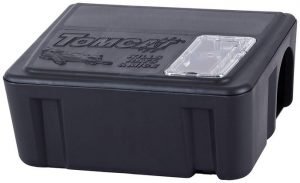
Tomcat is one of the most recognizable rodenticide brands in the US, and the company sells several distinct product lines rather than a single formula. Depending on which one you buy, the active ingredient may be bromethalin, a fast-acting neurotoxin, or an anticoagulant like diphacinone or bromadiolone.
Bromethalin-based Tomcat products tend to kill within a day or two, but there’s an important safety tradeoff worth knowing: bromethalin has no antidote. If a pet gets into it, treatment focuses on decontamination and supportive care rather than reversing the toxin directly. Anticoagulant-based Tomcat products work more slowly, typically requiring several days of feeding, but they’re treatable with Vitamin K1 if caught early, since that’s the standard antidote for anticoagulant rodenticides.
Tomcat also sells all-weather bait formulations rated for both indoor and outdoor use, along with dedicated mouse traps, so the brand covers a fairly wide range of situations beyond just poison bait.
D-Con Rat Killer

D-Con has been a household name for decades, but the product most people remember (built around second-generation anticoagulants like brodifacoum) isn’t what’s currently sold for residential use. In 2018, D-Con transitioned its consumer products away from anticoagulants entirely, in response to EPA restrictions on second-generation anticoagulant rodenticides for home use.
Current D-Con residential bait is built around cholecalciferol, which is a concentrated form of Vitamin D3. In the doses used in rodenticide, it causes calcium levels in the rodent’s blood to rise to dangerous levels, eventually leading to kidney failure over the course of a few days. This is a meaningfully different safety profile than the anticoagulant products D-Con used to sell: there is no specific antidote for cholecalciferol poisoning. If a pet ingests it, a veterinarian typically has to manage the case with aggressive IV fluids and medication to control calcium levels rather than reversing the toxin with a simple antidote the way Vitamin K works for anticoagulants.
That’s worth sitting with for a moment, since it runs counter to how a lot of homeowners assume “modern” or “reformulated” rodenticides work. The newer formula was adopted for regulatory reasons, not necessarily because it’s easier to treat if something goes wrong.
Key Differences That Actually Matter
How they work. Tomcat’s product range covers both a fast-acting neurotoxin and slower anticoagulants, while current D-Con residential products rely on Vitamin D3 toxicity. These are three genuinely different mechanisms, not just different speeds of the same poison.
Treatability if accidentally ingested. This is the difference most worth paying attention to. Anticoagulant-based products, whichever brand they’re under, have a known antidote in Vitamin K1. Both bromethalin and cholecalciferol do not, which means accidental exposure in a pet is a more serious veterinary emergency regardless of which brand caused it.
Resistance. Rodent populations in some areas have built up resistance to first-generation anticoagulants after decades of widespread use, which is part of why bromethalin and cholecalciferol-based products have become more common across the industry, not just with these two brands.
Regulatory history. D-Con’s 2018 reformulation happened because EPA rules restricted consumer access to the more potent second-generation anticoagulants it previously used. Tomcat’s product lineup varies by formulation, so it’s worth checking the specific label of whichever Tomcat product you’re considering, since not all of them use the same active ingredient.
Which One Should You Choose?
There’s no single answer that fits every situation, since it depends more on your priorities than on which brand is objectively “better.”
If you want the fastest possible kill and are comfortable knowing there’s no antidote if something goes wrong, a bromethalin-based Tomcat product fits that. If you’d rather use something treatable with a standard antidote in case of accidental exposure, an anticoagulant-based product (from either brand’s older or alternative lines, where available) is the safer bet, even though it takes longer to work. If you’re specifically choosing D-Con for its current residential formula, go in knowing it relies on Vitamin D3 toxicity with no antidote, not the older anticoagulant formula some people still associate with the brand.
Whichever you pick, the format matters as much as the brand. Always use a tamper-resistant bait station rather than loose bait, place it well out of reach of kids and pets, and check the specific label for the exact active ingredient, since both brands sell more than one formulation.
Frequently Asked Questions
Is Tomcat or D-Con safer for a home with pets?
Neither is inherently safe if ingested directly. What matters more is the format (a secured bait station versus loose bait) and knowing which active ingredient you’re using, since that determines what a vet can do if a pet gets into it.
Does D-Con still contain brodifacoum?
Not in its current residential products. D-Con transitioned to cholecalciferol (Vitamin D3) based formulas in 2018 after EPA restrictions on second-generation anticoagulants for consumer use.
What should I do if my pet eats D-Con or Tomcat bait?
Contact your veterinarian or an animal poison control hotline immediately, and if possible, bring the product packaging so they know exactly which active ingredient was involved. This matters more than usual here, since treatment differs significantly between anticoagulant, bromethalin, and cholecalciferol exposure.
Which one kills rats faster?
Bromethalin-based Tomcat products tend to act within a day or two. Anticoagulant-based products and D-Con’s current Vitamin D3 formula generally take several days, since both rely on a toxic effect building up over time rather than an immediate one.
Can rats become resistant to these poisons?
Yes, particularly to first-generation anticoagulants after repeated use in the same area. This resistance is part of why the industry, including both of these brands, has shifted toward bromethalin and cholecalciferol formulations in recent years.
Final Thoughts
Tomcat and D-Con solve the same basic problem in different ways, and neither is universally safer or more effective than the other once you look past the marketing. What actually matters is knowing which active ingredient is in the specific product you’re buying, since that determines both how it works and how treatable accidental exposure is. Whichever brand you choose, a tamper-resistant bait station and careful placement do more for household safety than the brand name on the box.