Discovering that you have rodents behind your drywall can be a stressful experience, but learning how to catch a mouse in the wall is a manageable task if you follow a systematic approach. Most homeowners assume they need to tear down walls to reach the pests, but that is rarely the case. Instead, the goal is to intercept the mouse as it leaves its nesting area to forage for food, effectively using the wall cavity as a natural funnel that directs them toward your traps.
By understanding rodent behavior and identifying their established travel routes, you can regain control of your home environment without unnecessary demolition. This guide focuses on non-invasive, strategic placement techniques that leverage the mouse’s natural tendency to follow baseboards and wall edges. With patience and the right placement strategy, you can resolve the issue safely and efficiently, ensuring that your home remains secure from future intrusions.
Before You Start: Preparation and Safety
Before you begin the process of trapping, it is essential to assess the situation thoroughly. You are not looking to catch the mouse inside the wall itself, but rather at the points where they emerge into your living space. Mice are creatures of habit; they rely on established paths, often called runways, which they traverse repeatedly to reach food and water sources. Identifying these paths is the most critical step in your success.
Safety should be your primary concern. If you have pets or small children, you must use enclosed trap stations to prevent accidental injury. Furthermore, avoid using chemical poisons, as a mouse dying inside a wall cavity will cause significant odor issues and potential sanitation concerns that are difficult to remediate. Stick to mechanical traps, such as snap traps or humane live-capture devices, which allow you to verify the catch and remove the rodent immediately.
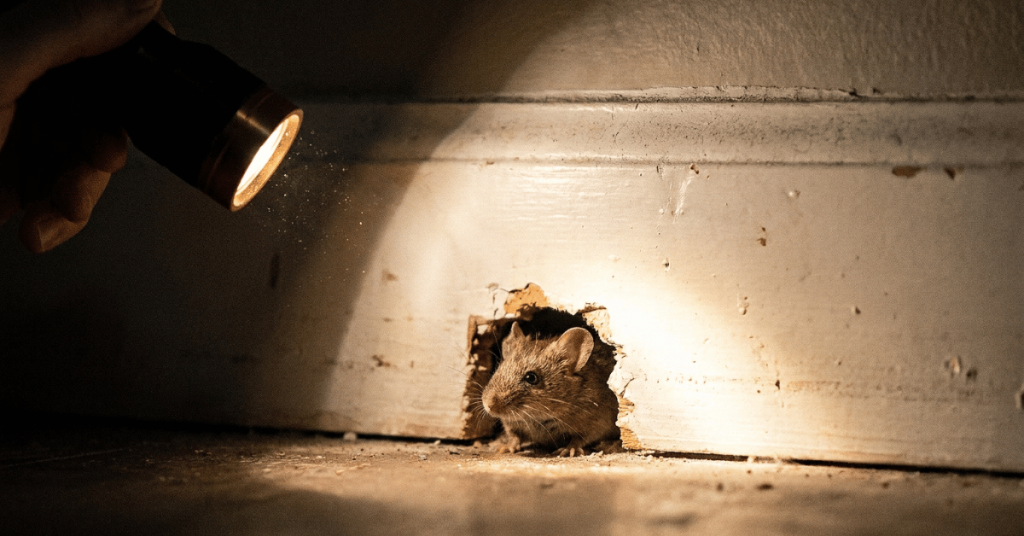
Take a moment to inspect your home for signs of activity. Look for droppings, rub marks—which appear as dark, greasy smudges along baseboards—and small holes in cabinets or near utility pipes. These signs indicate where the mouse is exiting the wall. If you find a hole, do not seal it immediately. If you block their exit before catching the mouse, you may trap them inside the wall, leading to further damage as they attempt to chew their way out elsewhere.
You Can Also Check: How to Catch a Mouse in Your House?
Tools and Prerequisites
To successfully catch a mouse, you need the right equipment. You do not need expensive technology; simple, reliable tools are usually the most effective. Gather a supply of high-quality snap traps, a pair of disposable gloves, and a reliable bait. Peanut butter, soft cheese, or a small piece of bacon are often more effective than commercial bait blocks because they provide a strong scent that attracts the mouse from a distance.
You will also need a flashlight to inspect dark corners and a few pieces of cardboard or painter’s tape to help guide the mouse toward your traps. If you are working in a basement or crawlspace, ensure you have adequate lighting and protective gear, such as a dust mask, to protect against potential allergens or pathogens found in rodent droppings. Having these items ready before you set your first trap will save you time and prevent unnecessary disruption to the area.
Step-by-Step Instructions
1. Locate the Entry Points: Use your flashlight to inspect the perimeter of your rooms. Look for gaps where pipes enter the wall, behind appliances, or along the bottom of kitchen cabinets. These are the primary transition points where the mouse moves from the wall cavity into your home.
2. Set the Traps Correctly: Place your traps perpendicular to the wall, with the trigger end facing the baseboard. This ensures that the mouse, which prefers to travel along edges, will encounter the bait as it runs along the wall. If you place the trap parallel to the wall, the mouse may simply run over the side of it without triggering the mechanism.
3. Use Multiple Traps: Mice are often more common than you think. Set traps in pairs, spaced about two to three inches apart at each identified entry point. This increases your chances of success if the mouse avoids the first trap or if there is more than one rodent present.
4. Bait Sparingly: You do not need a large amount of bait. A pea-sized amount of peanut butter is sufficient. If you use too much, the mouse may be able to lick it off without triggering the trap. Ensure the bait is pressed firmly into the trigger mechanism so the mouse has to work for it.
5. Monitor Daily: Check your traps every morning. If a trap has been triggered but is empty, clean it and reset it. If you catch a mouse, dispose of it according to local regulations and reset the trap immediately. Continue this process until you have gone at least one week without any signs of activity or successful catches.
Understanding Rodent Behavior and Psychology
To master the art of trapping, you must think like a rodent. Mice are neophobic, meaning they are naturally suspicious of new objects in their environment. This is why you might notice a mouse avoiding a trap for the first few days. This behavior is a survival mechanism; they are testing whether the new object poses a threat. To mitigate this, consider placing the traps in their path without setting them for the first 24 hours. This allows the mouse to grow accustomed to the presence of the trap, making them less likely to be wary when you finally arm the mechanism.
Furthermore, mice have poor eyesight but excellent tactile senses. They use their whiskers to navigate along walls and vertical surfaces. By placing traps flush against the wall, you are utilizing their reliance on these surfaces for navigation. If a trap is placed even an inch away from the wall, the mouse may simply bypass it, as it feels exposed in the open. Always prioritize flush placement to ensure the mouse encounters the trigger mechanism as it moves along its familiar path.
Also Check: How to Catch a Mouse in the Kitchen?
Advanced Strategies for Persistent Infestations
If you suspect a larger population, standard trapping might not be enough. In these cases, you need to implement a strategy of saturation. This involves placing traps at every potential entry point identified during your structural inspection. Do not just focus on the room where you hear the scratching; mice are highly mobile and can travel through wall voids across multiple rooms. By placing traps in the kitchen, laundry room, and basement simultaneously, you create a perimeter that makes it difficult for the mice to avoid detection.
Another advanced technique involves the use of tracking powders. By dusting a small amount of non-toxic, food-grade powder like cornstarch near suspected entry points, you can observe footprints. This provides visual confirmation of their travel routes. If you see tracks leading to a specific gap, you know exactly where to concentrate your trapping efforts. This data-driven approach removes the guesswork and allows you to be surgical in your placement, which is far more effective than scattering traps randomly throughout the house.
The Importance of Long-Term Pest Prevention
Once you have successfully caught the mice, the work is not finished. You must address the structural vulnerabilities that allowed them entry in the first place. This is the core of effective rodent control. Inspect the exterior of your home for gaps around utility lines, vents, and foundation cracks. Mice can squeeze through openings as small as a dime, so even minor gaps must be sealed. Use materials that rodents cannot chew through, such as copper mesh or steel wool, combined with a high-quality exterior-grade caulk or expanding foam.
Sanitation is equally critical. Mice are attracted to food sources, and even small crumbs or improperly stored pantry items can sustain a population. Ensure that all dry goods are stored in airtight glass or heavy-duty plastic containers. Regularly sweep behind appliances and clean out pantry shelves. By removing the incentive for them to enter your home, you significantly reduce the likelihood of a recurring infestation. Think of trapping as the immediate solution and exclusion as the permanent fix.
Common Mistakes to Avoid
One of the most frequent mistakes is moving traps too often. It takes time for a mouse to become accustomed to a new object in its environment. If you do not see results after two days, do not immediately move the traps. Give them at least three to four days before deciding to relocate them to a different area. Another common error is failing to eliminate alternative food sources. If there is accessible pet food or crumbs on the floor, the mouse has no incentive to investigate your bait.
Many people also forget to wash their hands or wear gloves when handling traps. Mice have a keen sense of smell and can detect human scent, which may make them wary of the trap. Always wear gloves to keep the traps scent-neutral. Finally, do not use too many traps in a way that creates a cluttered environment; keep the area clear so the mouse feels comfortable moving along its natural path.
Troubleshooting Your Trapping Strategy
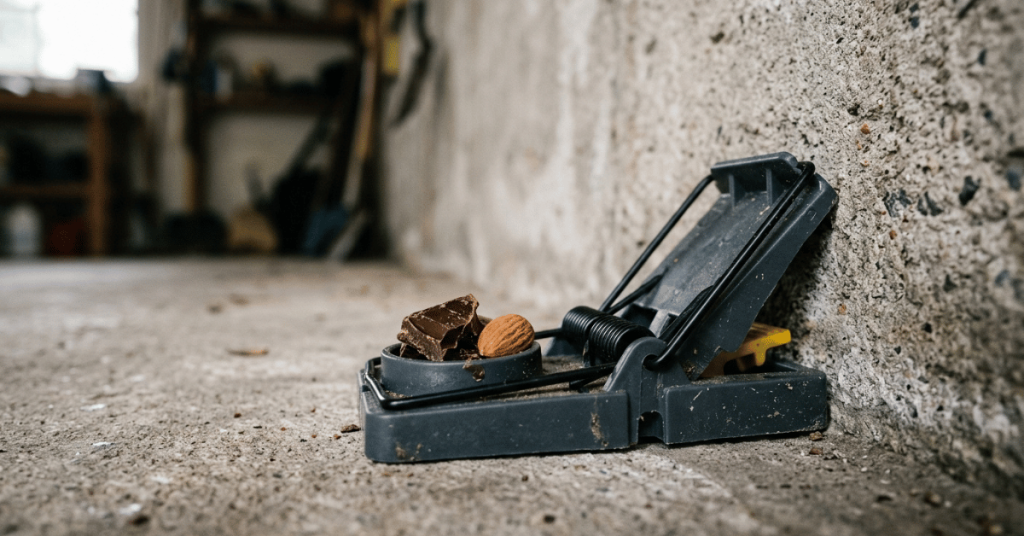
If you are not catching anything, first verify that the traps are actually being visited. You can place a small amount of non-baited flour on the floor around the trap; if you see footprints in the flour but the trap remains unsprung, your baiting technique or trap sensitivity may be the issue. Try switching to a different bait, such as a small piece of chocolate or a nut, which can sometimes be more enticing than peanut butter.
If the mouse is consistently stealing the bait without triggering the trap, the mechanism may be too stiff. Test the sensitivity of your traps by gently touching the trigger with a pencil. If it requires significant force, adjust the setting or replace the trap. If you have tried these steps for two weeks with no success, it may be time to consult a professional pest control service. They can perform a structural inspection to identify hidden entry points that are not visible to the average homeowner.
FAQ
How do I know if I have successfully caught the mouse in the wall?
You will know you have been successful when you stop seeing signs of activity, such as new droppings, fresh rub marks, or hearing scratching sounds inside the walls. If you have gone at least one full week without any evidence of rodents and your traps remain undisturbed, it is a strong indicator that you have successfully addressed the issue.
Should I seal the holes in the wall immediately?
No, you should not seal the holes until you are certain the mouse is gone. If you seal the holes while the mouse is still inside the wall cavity, it may die there, causing an odor problem, or it may chew through other parts of your home to escape. Wait until you have had a period of no activity before using steel wool or caulk to permanently seal entry points.
Is it better to use live traps or snap traps?
The choice depends on your preference, but snap traps are generally more efficient for immediate population control. Live traps require you to relocate the mouse far from your home, or it will likely find its way back inside. If you choose to use live traps, you must check them frequently to ensure the animal does not suffer from dehydration or stress.
Why can I still hear scratching even after catching a mouse?
It is common for homeowners to believe they have only one mouse when there is actually a larger infestation. If you continue to hear scratching, it is possible that other mice remain in the wall. Continue your trapping efforts, ensure all potential food sources are removed, and keep monitoring the area until the sounds cease completely.