Discovering small, crater-like openings across your lawn can be frustrating, especially when you realize they are the work of field mice or voles. Knowing how to fill mouse holes in yard areas is a necessary maintenance task that restores the aesthetic appeal of your landscape while preventing potential tripping hazards. These burrows often indicate that rodents are seeking shelter or food sources near your home, making it essential to address the holes properly rather than simply covering them with loose dirt.
Effective repair requires more than just shoveling soil into a gap. To ensure the holes remain filled and do not immediately sink or reopen, you must follow a structured approach that involves cleaning, filling, and compacting the area. By taking these steps, you can maintain a level, healthy lawn and discourage rodents from returning to the same spots in the future.
What You Need to Know: The most common mistake homeowners make is using loose topsoil without compaction. This leads to settling after the first rain, leaving you with the same hole a week later. To succeed, you must use a mix of soil and organic matter, pack it down firmly, and consider deterrents if the rodent activity is persistent.
The Importance of Proper Lawn Restoration
When you address rodent activity, you are engaging in a form of lawn maintenance that protects the long-term health of your turf. Unfilled holes create pockets of air that dry out root systems, leading to patchy grass growth and uneven terrain. Beyond the visual impact, these holes can compromise the structural integrity of the soil, making it easier for weeds to take root in the disturbed earth. By systematically filling these voids, you encourage the surrounding grass to knit together, creating a denser, more resilient lawn surface that is less hospitable to future burrowing.
Preparation and Assessment
Before you begin the physical work, take a moment to assess the extent of the damage. A single hole might be an isolated incident, but a network of tunnels often suggests a larger population of rodents living in your garden beds or beneath thick mulch layers. Identifying whether you are dealing with mice or voles is helpful, as their behaviors differ slightly; voles, for instance, often create surface runways in addition to deeper burrows.
Gathering Your Supplies
You do not need heavy machinery for this task. A few basic garden tools are sufficient to handle most residential lawn repairs. Ensure you have the following items ready:
- A sturdy garden trowel or small spade for digging.
- High-quality topsoil or a mix of soil and compost.
- A tamper or the flat side of a heavy rake to compress the earth.
- Grass seed and a light straw covering if you are repairing an active lawn area.
- Work gloves to protect your hands from debris or potential pathogens found in rodent burrows.
Safety Considerations
While mice in the yard are generally a nuisance, they can carry parasites or bacteria. Always wear gloves when reaching into or near burrows. If you notice a significant number of holes, or if you suspect the rodents are entering your home’s foundation, it is time to stop and consult with a professional pest control service. Filling holes is a cosmetic and structural fix for the yard, but it will not solve a structural infestation inside your walls.
Step-by-Step: How to Fill Mouse Holes in Yard Spaces
Follow these steps to ensure your repairs are durable and help discourage future burrowing. The goal is to make the ground density uniform with the surrounding area so that it no longer feels like a soft, inviting tunnel entrance.
1. Clear the Entrance
Use your trowel to widen the opening slightly. This allows you to see if the hole is a simple vertical shaft or a horizontal tunnel. Remove any loose debris, dead grass, or sticks that the mice may have dragged into the entrance. Clearing the area ensures that the new soil bonds well with the existing earth.
2. Fill the Void
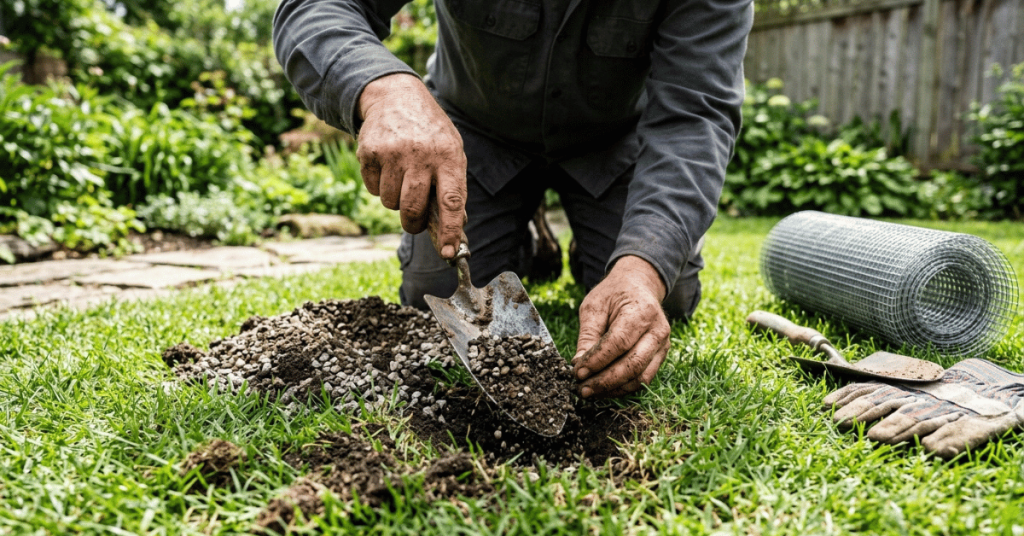
Instead of just dumping dirt on top, fill the hole from the bottom up. If the hole is deep, add soil in stages. Pour a small amount of soil into the hole, then use a stick or the handle of your trowel to poke the soil down, ensuring it reaches the bottom of the tunnel. This prevents air pockets, which are the primary cause of future sinking.
3. Compact the Soil
Once the hole is filled to just below the surface level, use your foot or a hand tamper to pack the soil down firmly. The goal is to match the density of the surrounding ground. If the soil is too loose, it will wash away during the next irrigation or rainfall. Add more soil as needed until the surface is level with the rest of your lawn.
4. Restore the Surface
For holes located in the middle of your lawn, you will want to restore the grass cover. Sprinkle a small amount of grass seed over the patched area and lightly rake it into the top layer of soil. Cover the seed with a thin layer of straw or peat moss to retain moisture and protect the seeds from birds until they germinate.
Advanced Strategies for Persistent Rodent Activity
If you find that the holes are being reopened within a day or two, you are likely dealing with an active colony. In these cases, simply filling the holes is not enough. You may need to introduce natural deterrents. Some gardeners find success by placing crushed gravel or hardware cloth just below the surface level of the hole, which makes it physically difficult for the rodent to dig back out. This method, often used in professional pest management, acts as a physical barrier that discourages the animal from re-excavating that specific path.
Habitat Modification as a Long-Term Solution
Filling burrows is only half the battle; the other half is habitat modification. Rodents thrive in environments that offer both cover and food. If your yard has overgrown shrubs, piles of wood, or dense ground cover, you are essentially providing a protected highway system for pests. By trimming back vegetation and elevating woodpiles, you remove the protective canopy that mice rely on to move safely across your property. This exposure makes them vulnerable to natural predators, which is a key component of effective, long-term rodent control.
Managing Food Sources
Consider the proximity of food sources. Bird feeders are a major culprit; spilled seeds attract rodents, which then build nests in the nearby lawn. Moving your bird feeders or using a catch tray to prevent seed from hitting the ground can significantly reduce the rodent population in your yard. Additionally, ensure that compost bins are sealed and that pet food is never left outside overnight. These small changes in your daily routine can have a massive impact on the frequency of burrowing activity.
Common Mistakes to Avoid
Many homeowners struggle with recurring holes because they skip critical steps. One common error is using sand to fill the holes. While sand is easy to pour, it does not hold its shape and is easily excavated by rodents again. Stick to a nutrient-rich topsoil or a compost-soil blend that will support grass growth. Another mistake is failing to account for soil settling. Even with careful compaction, soil will naturally settle after the first heavy rain. Always keep a small bucket of extra soil on hand to top off the area a few days after your initial repair.
When to Call a Professional
There is a clear distinction between a few mice in the yard and a full-scale infestation. If you notice tunnels leading directly toward your home’s foundation, or if you see signs of rodents inside your garage or basement, do not rely on yard repairs alone. These are signs of a structural issue that requires professional intervention. A pest control expert can assess the situation, identify entry points, and provide a comprehensive management plan that goes beyond filling holes in the dirt. They can also offer advice on exclusion techniques that prevent rodents from finding new ways into your home, which is far more critical than fixing a few holes in the grass.
Ultimately, learning how to fill mouse holes in yard environments is about maintaining the integrity of your landscape. By following these steps and addressing the surrounding habitat, you can keep your lawn healthy and discourage unwanted visitors from making your yard their home. Consistent, proactive maintenance is the best defense against the cycle of digging and filling that plagues many suburban lawns.
FAQ
Can I use gravel to fill mouse holes in the yard?
Yes, using a mix of gravel and soil can be effective. The gravel makes it physically difficult for mice to re-excavate the tunnel, while the soil allows grass to grow over the top. This is a great strategy for holes that keep reappearing.
How do I know if the holes in my yard are from mice or something else?
Mouse and vole holes are typically 1 to 2 inches in diameter. If you see surface runways—small, worn paths in the grass leading to the holes—it is likely voles. Larger holes might indicate chipmunks or squirrels, which require different management strategies.
Will filling the holes kill the mice?
No, filling the holes is not a pest control method and will not harm the rodents. It is a landscaping repair technique. If you have a significant rodent problem, you must address the food sources and habitat, such as woodpiles or bird feeders, to encourage them to leave.
Is it safe to fill these holes with my bare hands?
It is not recommended. Rodents can carry various pathogens and parasites. Always wear work gloves when handling soil in areas where you have identified rodent activity to protect yourself from potential health risks.